
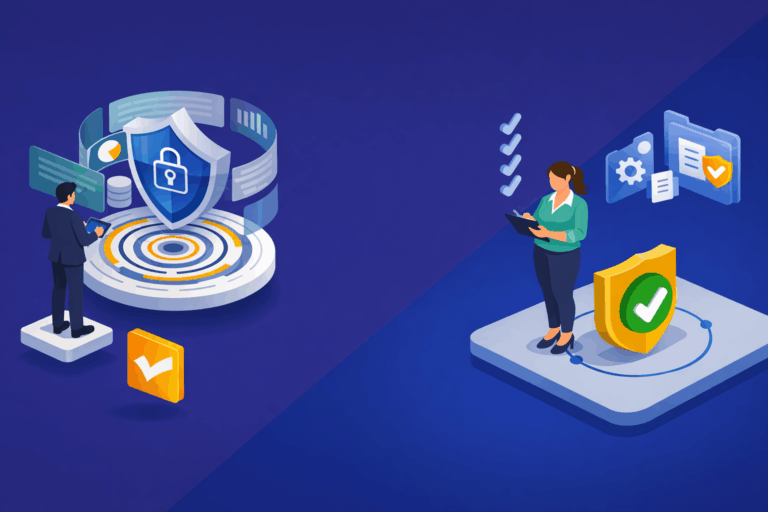
As enterprises accelerate digital transformation, ERP systems have become the backbone of business operations. From finance and HR to procurement and supply chain, ERP platforms manage highly sensitive data and control mission-critical processes. Without strong access governance, these systems are exposed to security breaches, fraud, and regulatory failures. This is why identity governance for ERP has become a foundational requirement for modern enterprises.
Identity governance goes far beyond basic user access management. It ensures that every identity, employees, contractors, partners, integrations, and service accounts, has the right access, at the right time, for the right purpose. Through role-based access controls, policy enforcement, and continuous monitoring, organizations can prevent excessive privileges, segregation-of-duties (SoD) conflicts, and unauthorized activity before they create risk.
The Growing Complexity of ERP Access
In large and evolving organizations, ERP access complexity increases rapidly. Over time, environments accumulate thousands of users, custom roles, integrations, and temporary privileges, many of which outlive their original purpose. Manual access reviews and point-in-time audits are no longer sufficient to manage this scale or pace of change.
Modern enterprises require automated, continuous identity governance frameworks that provide real-time visibility into access risk across the ERP landscape. Without this, access risk remains hidden until audit findings, security incidents, or operational failures occur.
Business Value of Mature Identity Governance
A well-designed identity governance strategy delivers measurable enterprise value:
- Stronger Security – Reduces insider risk, unauthorized access, and privilege abuse
- Improved Compliance – Aligns ERP access controls with SOX, GDPR, ISO, and industry standards
- Operational Efficiency – Automates provisioning, deprovisioning, and access reviews
- Business Agility – Enables growth, transformation, and change without sacrificing control
Most importantly, identity governance shifts organizations from reactive access management to proactive risk prevention.
Moving from Policy to Continuous Control
Effective identity governance in ERP environments requires more than policies and periodic reviews. It demands intelligent analytics, continuous risk detection, and integrated governance workflows that adapt as the business changes. Without these capabilities, governance remains fragmented and reactive.
1Trooper empowers organizations with ERP-native identity governance designed for complex, cloud-based environments. By combining automation, analytics, and policy-driven controls, 1Trooper enables continuous access governance across Oracle Cloud, Workday, and other ERP platforms, helping organizations maintain control as they scale.
Final Thoughts
In today’s enterprise landscape, identity governance for ERP is no longer just an IT responsibility; it is a strategic enabler of secure growth. Organizations that invest in robust, automated governance frameworks gain stronger control, faster compliance, and greater confidence in their digital operations.