
As organizations expand their digital ecosystems, the need to collaborate with vendors, suppliers, contractors, partners, and other external entities has become inevitable. These third-party users often require access to internal systems, applications, and networks to deliver critical services. While this accessibility supports operational efficiency and business growth, it also introduces significant security and compliance risks.
From data breaches and security vulnerabilities to regulatory non-compliance and intellectual property exposure, unmanaged third-party access can cause substantial harm. Therefore, modern enterprises must adopt robust identity governance strategies to ensure that external users are granted the right level of access, no more, no less, and only for as long as required.
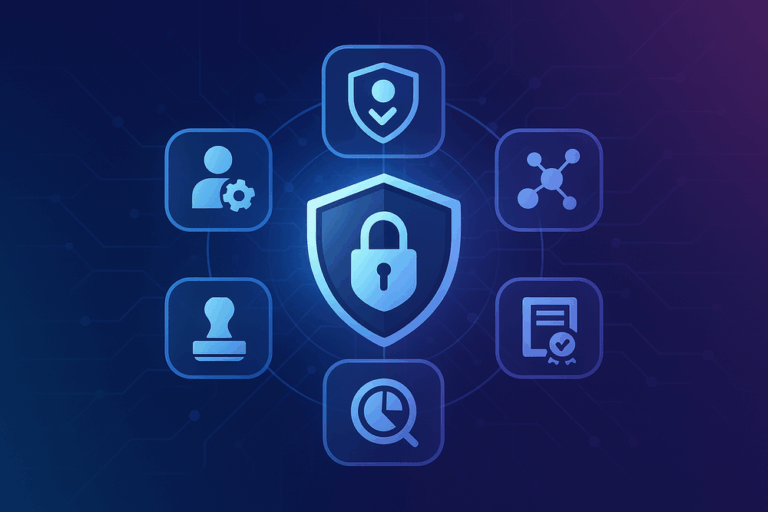
A well-defined Third-Party Access Management (TPAM) framework is essential to secure organizational assets while maintaining operational agility. Below are the top six features that help safeguard organizations from third-party access risks and streamline identity management processes.
Policy-Based Access Control (PBAC)
Policy-based Access Control (PBAC) strengthens security by ensuring that third-party users receive access purely based on predefined policies.
PBAC enables organizations to:
- Assign roles and permissions aligned with business requirements
- Prevent unauthorized or excessive access
- Enforce dynamic, context-aware access policies
This ensures that every external user’s access is accurately aligned with their responsibilities and contractual boundaries.
Automated User Provisioning & Deprovisioning
Automating third-party user lifecycle management is critical to preventing security gaps.
A strong IGA platform should streamline:
- Account creation and onboarding
- Role assignment based on business justification
- Fast and accurate deprovisioning when access is no longer needed
Automation reduces manual errors, accelerates onboarding, and eliminates unused accounts—one of the biggest risks in third-party access environments.
Structured Access Request Workflows
A formalized and auditable access request process is essential for third-party risk governance.
An ideal workflow includes:
- Standardized request forms
- Multi-level approval hierarchies
- Notifications and alerts
- Clearly documented authorization trails
This ensures that every external access request is vetted, verified, and approved by the right stakeholders.
Access Monitoring and Auditing
Real-time monitoring and comprehensive auditing are critical for detecting unusual or risky activities.
Monitoring systems should log:
- Access events
- Permission changes
- Authentication patterns
- Resource usage
With complete visibility into third-party activities, organizations can identify potential threats early and maintain continuous compliance with regulatory mandates such as ISO, SOC 2, HIPAA, and GDPR.
Integration with Identity and Access Management (IAM) Systems
Seamless integration with existing IAM platforms centralizes the identity ecosystem and simplifies third-party onboarding.
Key advantages include:
- Unified policies and access controls
- Efficient directory and attribute management
- Consistent enforcement of least-privilege access
- Reduced administrative overhead
When all identities, internal and external, are managed from a single platform, organizations gain improved control and visibility.
Regular Access Reviews and Certifications
Access reviews ensure that third-party permissions remain relevant and necessary over time.
Periodic reviews help:
- Identify redundant or excessive access
- Validate the legitimacy of active accounts
- Reduce exposure to privilege misuse
- Meet compliance requirements
Routine certifications strengthen governance and minimize long-term access risks.
Why Organizations Must Avoid Multi-Point Solutions?
Managing third-party access through multiple disconnected tools often creates complexity, blind spots, and inconsistent security controls. A fragmented approach increases risk rather than reducing it.
Instead, organizations should adopt a unified identity governance platform capable of managing:
- Employees
- Vendors and partners
- Contractors
- IoT devices
- Service accounts and bots
A centralized platform ensures streamlined operations, consistent policy enforcement, and complete visibility across all identities.
How 1Trooper Helps Organizations Mitigate Third-Party Access Risks?
1Trooper’s Identity Governance & Administration (IGA) platform delivers a comprehensive solution for managing internal and external identities with precision and control. Our platform provides:
- Dynamic policy-based access control
- Automated provisioning and deprovisioning
- End-to-end access request workflows
- Continuous monitoring and audit logging
- IAM-integrated user lifecycle management
- Scheduled access reviews and certifications
With 1Trooper, organizations can simplify onboarding, strengthen security controls, and significantly reduce the risks associated with third-party access.