
For many years, organizations viewed physical access controls, security guards, ID cards, biometric gates, and building access systems as a dominant layer of protection. Although these controls still play an important supporting role, they can no longer serve as the foundation of enterprise security.
Cyberattacks have evolved dramatically, and today’s threats rarely originate at the office premises. With distributed work models and cloud-first application strategies, most corporate risks are digital, remote, and identity-based. As a result, organizations that rely heavily on physical access management expose themselves to significant vulnerabilities.
The Shift: From Physical Security to Identity Security
Physical access management remains useful for preventing unauthorized individuals from entering office spaces or data centers. However, its relevance has reduced as workforces and assets have moved beyond traditional boundaries.
- Modern organizations operate in an environment where:
- Employees work remotely and access critical applications from multiple locations
- Business systems are hosted in cloud and hybrid environments
- Cybercriminals execute attacks from anywhere in the world
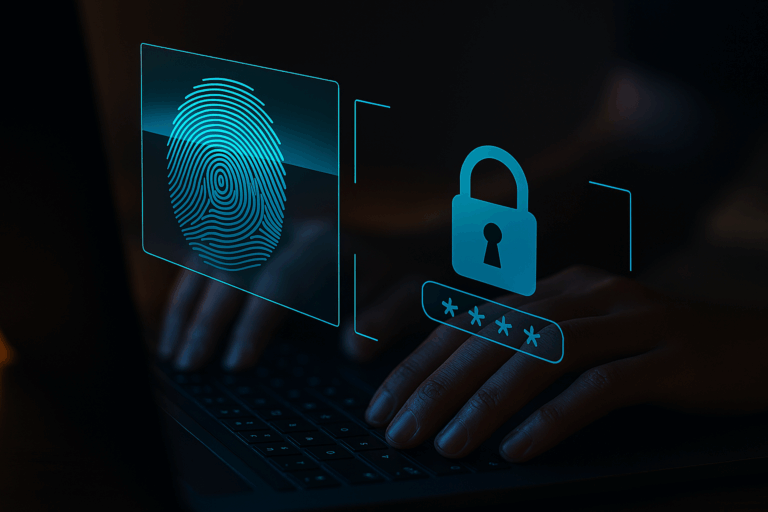
In this reality, protecting digital identities is more important than protecting physical doors. An effective security program integrates physical controls but does not depend on them for data protection. A holistic IT security strategy places identity, access governance, and privileged control at the core.
Strengthening Security Through Modern Tools and Software
Achieving security in the digital era requires advanced solutions that support automation, compliance, and adaptive access control. Below are essential software capabilities that enable organizations to elevate their IT security posture.
Password Management — The First Line of Digital Defense
Passwords are far more powerful than physical keys or keycards, but only when managed correctly.
Weak or reused passwords remain one of the leading causes of data breaches. While passwords can be guessed, cracked, or phished, robust password management tools greatly reduce the risk, enabling organizations to:
- Enforce password complexity requirements
- Rotate passwords securely
- Enable multi-factor authentication (MFA) such as SMS or app-generated security codes
By applying smart password controls, organizations strengthen identity protection and mitigate unauthorized access.
Single Sign-On (SSO) — Security Without Workforce Friction
Security should empower employees rather than interrupt productivity. When multiple login portals and password requirements are introduced, employees experience fatigue and resistance toward IT security policies.
Single Sign-On (SSO) eliminates this problem by allowing users to access multiple applications through one secure login credential.
Benefits include:
- Reduced password burden
- Improved employee satisfaction
- Stronger centralized security controls
By reducing login complexity, SSO boosts workforce engagement while enhancing organizational security.
Self-Service Password Resets — Empowering Employees, Reducing IT Load
Password resets are among the most frequent requests IT service desks receive. Delayed resets lead to lost productivity and IT bottlenecks.
Self-service password reset tools enable users to regain access independently, without needing IT intervention. This change results in:
- Faster user recovery during lockouts
- Reduced dependency on IT teams
- Better adoption of cybersecurity tools
Empowering employees to manage their own credentials increases efficiency while strengthening the overall access governance framework.
Conclusion
Physical access management is no longer enough to secure the modern enterprise.
With remote work, cloud technologies, and global digital access becoming the new norm, identity forms the core of cybersecurity.
Organizations seeking true data protection must shift from perimeter-based security toward identity-centric security, driven by:
- Strong password governance
- Password self-service capabilities
- Single Sign-On (SSO)
- Automation of identity lifecycle and access processes
By prioritizing digital identity over physical barriers, enterprises can secure confidential data, enhance employee experience, and future-proof their cybersecurity posture against evolving threats.