
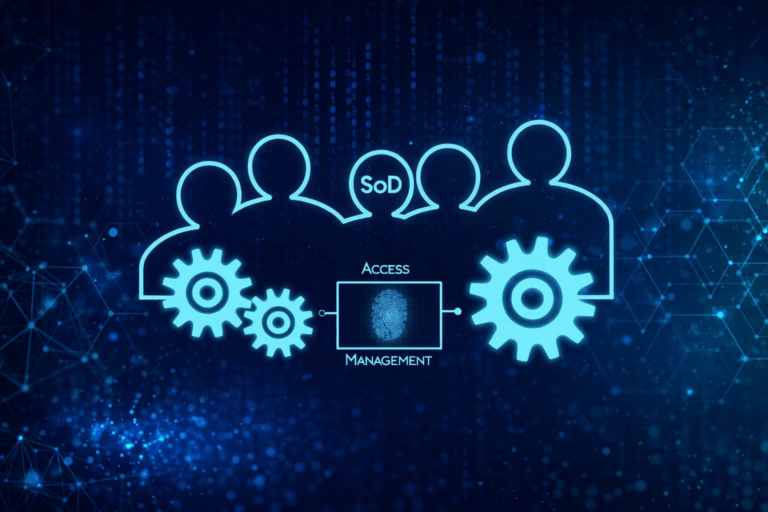
As organizations evolve, their business processes, roles, and responsibilities continuously change. While this growth drives innovation and efficiency, it also increases pressure on governance, risk, and compliance frameworks. In this dynamic environment, Access Management, supported by effective Segregation of Duties (SoD), has become a critical requirement rather than an option.
This blog explores why SoD is fundamental to optimizing access management, the challenges organizations face, and how a robust SoD solution strengthens security, compliance, and operational efficiency.
Why Organizations Need Strong Access Management and SoD
Modern enterprises operate across multiple systems, applications, and platforms. As users change roles and responsibilities, access privileges must be continuously evaluated to prevent excessive or conflicting access.
Organizations need access management and SoD to:
- Track frequent changes in user roles and responsibilities
- Maintain visibility into who has access to what and why
- Continuously recalculate SoD rules to prevent internal fraud
- Reduce security gaps caused by outdated or excessive access
Without effective SoD controls, organizations expose themselves to operational risks, fraud, and regulatory non-compliance.
Importance of Managing Segregation of Duties (SoD)
Segregation of Duties is a core pillar of access governance. Its primary objective is to mitigate internal fraud and operational risk by ensuring that no single individual has control over conflicting tasks within a business process.
Example of SoD in Practice
In payroll processing:
- One employee calculates gross and net pay
- Another employee independently reviews and verifies the calculations
This separation ensures accountability, transparency, and fraud prevention.
By enforcing clear boundaries between roles and responsibilities, SoD reduces conflicts of interest and strengthens internal controls, making it a critical component of an optimized access management strategy.
Key Challenges in Managing SoD Effectively
Rapid Evolution of Roles and Business Processes
Business processes and employee roles are constantly evolving. This creates challenges such as:
- Frequent access changes
- Manual updates to SoD rules
- Increased risk of unnoticed conflicts
To keep pace, organizations require advanced, fast, and efficient access management tools that can automatically adapt to role and responsibility changes without compromising security.
Inefficiencies of Unknown or Fragmented ERP Systems
Some organizations attempt to manage SoD using:
- Spreadsheets
- Manual reviews
- Standalone or unfamiliar ERP tools
- Consultancy-driven assessments
These approaches lack accuracy, scalability, and real-time integration with access management systems. As a result, SoD controls become reactive rather than proactive.
A time-sensitive SoD analysis tool overcomes these limitations by simulating potential conflicts before they occur, enabling organizations to update SoD policies quickly while improving performance and reducing costs.
What Does an Effective Segregation of Duties Tool Do?
A modern SoD tool is designed to automate, monitor, and enforce access governance across the enterprise. Key capabilities include:
- Mitigating risks related to internal fraud and malicious activities
- Ensuring compliance with regulatory and audit requirements
- Separating access across multiple applications, systems, and accounts
- Automating the entire SoD management lifecycle
- Analyzing all user accounts with access to enterprise systems
- Identifying financial and operational risks within user roles
- Recommending remediation actions for detected conflicts
- Predicting risks arising from role changes and user behavior
- Automatically resolving conflicts through periodic reviews
By automating these processes, organizations reduce manual effort, improve accuracy, and maintain continuous compliance.
Conclusion
Segregation of Duties is essential for optimizing access management in today’s rapidly changing enterprise environments. As roles evolve and systems grow more complex, manual or fragmented SoD approaches are no longer sustainable.
By implementing an integrated, automated SoD solution, organizations can:
- Strengthen internal controls
- Prevent fraud and access misuse
- Maintain continuous compliance
- Improve operational efficiency
At 1TRS, we help organizations implement intelligent Access Management and SoD solutions that adapt to business change, reduce risk, and support scalable growth—without compromising security or governance.