
Identity Access Management Cloud: The Corporate Armour for Modern Enterprises
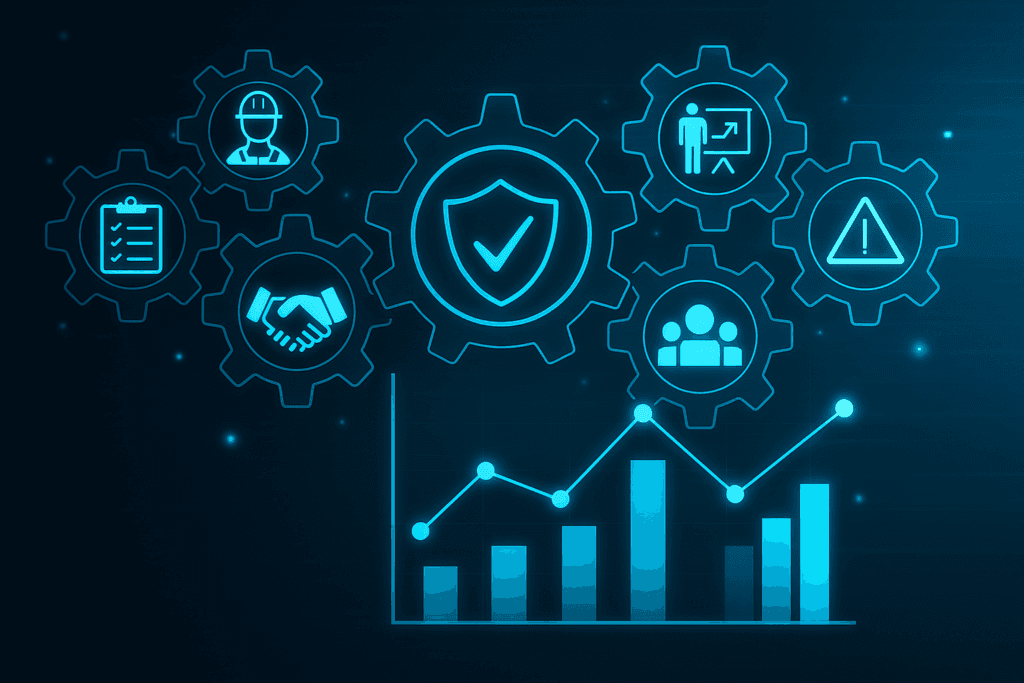
In a world where cyber threats evolve faster than ever, protecting your organization from malicious external actors is only the beginning. A strong Identity Access Management (IAM) Cloud strategy is the corporate armour modern enterprises need to secure data, reduce risk, and accelerate digital transformation.
As organizations migrate to hybrid and multi-cloud environments, managing the exploding number of identities—employees, contractors, service accounts, partners, bots—becomes exponentially challenging. A mature IAM program is no longer optional; it is a foundational component of long-term data security.
Why Data Security Matters More Than Ever
Data security is the lifeline of digital trust. It safeguards customer relationships, protects sensitive information, and shields organizations from legal and regulatory exposure.
Compliance Risk Is Increasing
Government bodies and industry regulators are responding to rising global threats by strengthening cybersecurity mandates.
Many frameworks—including ISO 27001, NIST, SOX, GDPR, HIPAA, and PCI-DSS—explicitly require:
- Strong IAM controls
- Periodic risk assessments
- Continuous access review
- Principle of least privilege enforcement
Non-compliance carries significant fines and operational consequences.
Rising Lawsuit Exposure
As data breaches become more common, governments are granting citizens more power to take legal action against organizations that fail to implement sufficient security controls.
Inadequate IAM often becomes a key factor in breach investigations, and a costly liability.
IAM Analytics: The Engine of Modern Data Security
Automating IAM workflows allows organizations to build risk-based, contextual controls that significantly strengthen cybersecurity postures.
Once these controls are established, intelligent analytics help streamline traditionally manual IAM tasks such as:
- Access provisioning
- Access approvals
- Periodic access certifications
- Privilege reviews
- Segregation of Duties (SoD) checks
This reduces both workload and human error—two of the biggest contributors to data breaches.
Create a Single Source of Truth for Identity
In most enterprises, user definitions vary across HR systems, cloud applications, legacy tools, and on-premise platforms.
This fragmentation leads to redundant data, inconsistent access models, and higher security risk.
Automated IAM solves this by:
- Unifying user identities, roles, and groups
- Providing centralized definitions and governance
- Reducing the need for multiple monitoring systems
- Minimizing access conflicts and SoD violations
A unified identity view gives IT administrators better visibility and dramatically lowers the risk of misprovisioning or privilege escalation.
Fine-Grained Permissions for Stronger Security
Traditional role-based access alone is no longer enough.
Modern IAM requires fine-grained, attribute-based permissions that allow:
- More precision in granting access
- Tighter control over sensitive operations
- Enforcement of least-privilege principles
- Protection against privilege abuse
- Better compliance with regulatory frameworks
As permissions become more granular and centralized, organizations can simultaneously enhance security and streamline user experience.
Predictive Access: Streamline Requests, Reviews, and Certifications
IAM systems infused with analytics and automation enable predictive access, a groundbreaking capability that:
- Anticipates user access needs
- Auto-suggests the right entitlements
- Prevents excessive privileges
- Accelerates onboarding
- Simplifies role assignment and certification processes
Users get the access they need in near real-time, while decision-makers gain confidence that access remains aligned with organizational policies.
Reduce Operational & Compliance Costs Through Automation
Human error remains one of the biggest contributors to cyber risk.
Automation significantly reduces this by:
- Maintaining a trusted identity source
- Continuously monitoring for unusual access requests
- Enforcing security controls in real-time
- Reducing manual access reviews
- Simplifying compliance audits
- Minimizing administrative overhead
Organizations that embrace automated IAM see measurable reductions in operational costs, compliance effort, and audit findings.
IAM Cloud: The Corporate Armour Every Enterprise Needs
In today’s dynamic threat landscape, enterprises cannot rely on perimeter security alone.
Identity is the new security boundary, and IAM Cloud solutions serve as the armour that protects that boundary.
With the rise of generative AI, cloud adoption, remote workforces, and complex third-party ecosystems, only a modern IAM strategy can safeguard the organization's most critical asset and its data.
Whether your business is scaling rapidly or undergoing digital transformation, IAM Cloud solutions provide:- Strong protection against data breaches
- Improved regulatory compliance
- Enhanced internal governance
- Streamlined identity lifecycle management
- Reduced operational costs
Conclusion: Building a Future-Ready Security Foundation With 1Trooper
Identity Access Management is no longer just an IT requirement; it is the backbone of enterprise security. As cyber threats accelerate and compliance mandates become more demanding, organizations must shift from traditional perimeter defenses to identity-centric strategies. IAM Cloud is the only way to achieve the intelligence, automation, and governance required to secure modern digital ecosystems.
With 1Trooper IAM, enterprises gain a powerful, AI-driven platform that unifies identities, automates governance, streamlines access decisions, and protects critical data across cloud and on-premise environments. By leveraging predictive access, fine-grained permissions, centralized identity visibility, and automated risk controls, 1Trooper enables organizations to create a resilient and scalable security foundation.
The result is a future-ready IAM strategy that reduces operational costs, minimizes compliance exposure, and empowers your workforce with secure, frictionless access. In a world where identity is the new perimeter, 1Trooper stands as the corporate armour that protects your organization today and prepares it for the challenges of tomorrow.
- #1Trooper
- #1TRS
- #AccessManagement
- #AIinSecurity
- #CloudIAM
- #CloudSecurity
- #ComplianceManagement
- #CyberSecurity
- #DataProtection
- #DigitalTransformation
Related articles
Save Up to $750K with Oracle Cloud License Optimization Using 1TRC License Management
Enterprises today are under pressure to modernize their technology stack while maintaining strict cost control. As organizations migrate workloads to Oracle Cloud, one persistent issue continues to quietly erode budgets: inefficient license management. Unused licenses, over-provisioned roles, unnecessary Enterprise Editions, and misaligned entitlements often go unnoticed, yet they accumulate into significant annual overspend. With a…
Oracle Cloud License Optimization: Why Pay for More Than You Need?
In today’s cloud-first enterprise landscape, organizations are rapidly adopting Oracle Cloud to gain scalability, performance, and operational flexibility. Yet as businesses modernize, one persistent challenge continues to drain IT budgets: overpaying for Oracle licenses. Many enterprises unknowingly pay for more Oracle Cloud licenses, higher editions, or unused entitlements than their business truly requires. Over time,…
Why ERP Compliance Software Is Essential for Modern Enterprises: From Audit Readiness to Continuous Control?
Modern enterprises operate on complex ERP ecosystems. Platforms such as SAP, Oracle, Workday, NetSuite, and Microsoft D365 power finance, procurement, HR, supply chain, and operational decision-making. These systems are the digital backbone of the enterprise. But as ERP environments expand, so does compliance risk. Without structured governance, organizations face increasing exposure to segregation of duties…